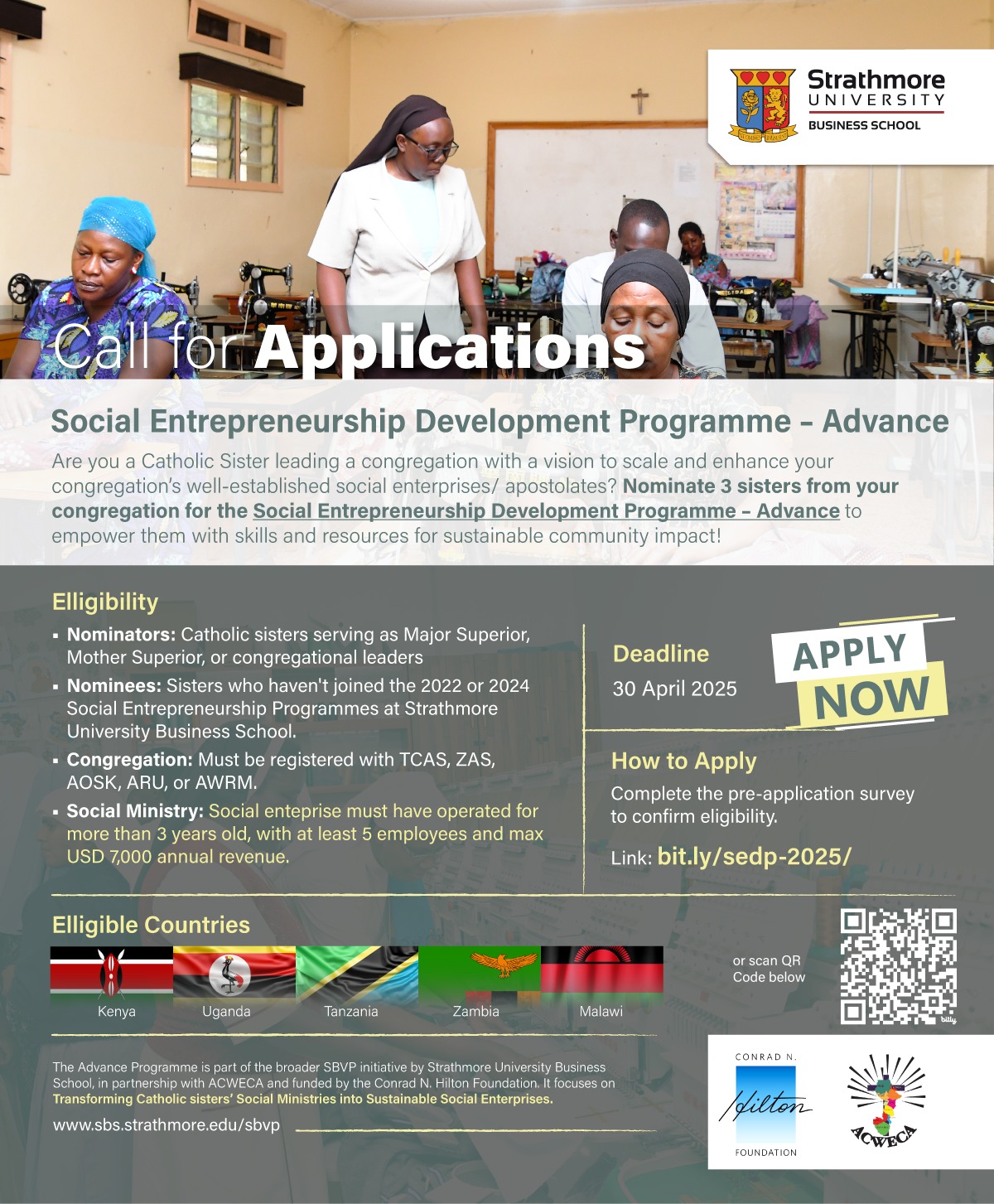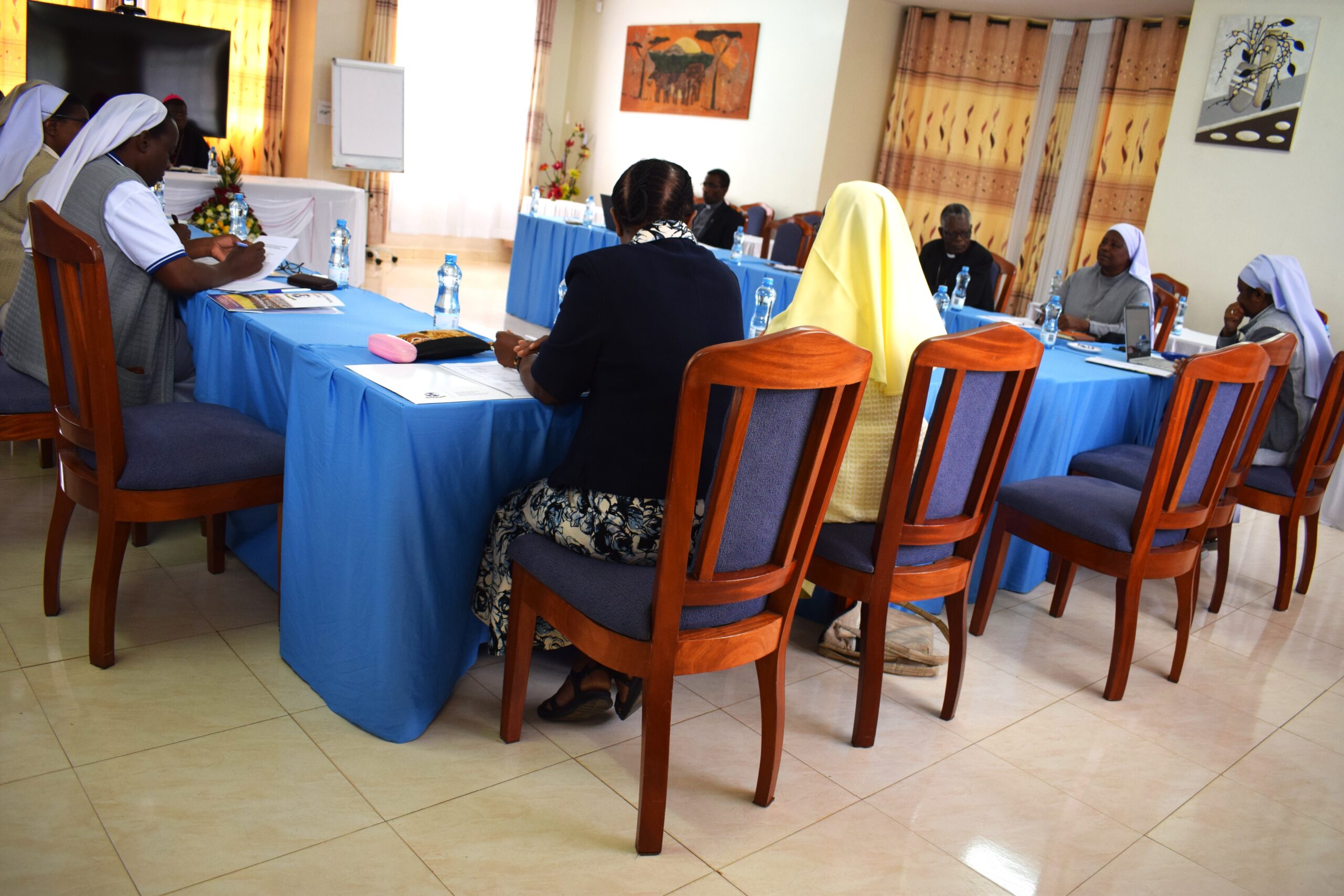
Kampala, Uganda – Twenty Catholic Sisters in Uganda have taken a bold step toward ensuring the long-term viability of their social ministries by completing the Sisters’ Blended Value Project (SBVP), a groundbreaking initiative designed to equip religious women with the skills to build financially sustainable enterprises.
The program, a collaboration between the Association of Consecrated Women in Eastern and Central Africa (ACWECA) and Strathmore University in Kenya, empowers Sisters to transition from traditional charity-based ministries to self-sustaining social enterprises, ensuring their work continues to uplift vulnerable communities for years to come.
A Vision for Sustainability
At the heart of this initiative is, Sr. Maria Speranza Namusisi, President of the Association of Religious in Uganda (ARU) and an ACWECA board member, who has championed the need for financial resilience in religious missions.
Speaking at the graduation ceremony on September 4 at Speke Resort Munyonyo, Sr. Speranza credited the Conrad N. Hilton Foundation for its pivotal support, which has enabled Sisters across the region to reimagine their ministries as sustainable ventures.
“We are deeply grateful to the Hilton Foundation for their visionary partnership,” she said. “This program ensures that our social missions—whether in healthcare, education, or poverty alleviation—can thrive independently, even amid economic challenges.”
She also praised Strathmore Business School and ACWECA for their role in delivering rigorous business training, emphasizing that financial literacy is no longer optional for religious leaders, it is essential for lasting impact.
Multiplying the Mission
Sr. Speranza urged the graduates to become catalysts for change within their congregations, sharing their newfound expertise in business management, fundraising, and social entrepreneurship.
“You are now ambassadors of sustainability,” she told the Sisters. “The knowledge you’ve gained must ripple outward, strengthening not just your own projects but empowering your fellow Sisters to build resilient ministries.”
This call to action aligns with SBVP’s broader objectives: enhancing leadership skills, expanding professional networks, and improving access to financial resources. A 2021 Hilton Foundation survey had identified funding gaps, leadership deficits, and sustainability challenges as key obstacles for women’s religious institutes, issues this program directly addresses.
Faith at the Core of Enterprise
While the training focuses on financial sustainability, the spiritual mission remains central. Dr. Angela Ndunge, Principal Investigator for SBVP at Strathmore Business School, reminded graduates that their work must always reflect a higher purpose.
“Our goal is deeper evangelization,” she said. “Let every social enterprise you build be a beacon of hope. When communities encounter your work, they should see Christ’s love in action.”
For Sr. Speranza and ACWECA, this initiative represents more than economic empowerment, it is a reinvention of how religious women can serve more effectively while securing their ministries’ futures.
A Regional Movement Begins
The Uganda graduation marks the first in a series, with similar ceremonies planned for Tanzania, Kenya, and Zambia in the coming months, signaling a growing movement toward sustainability in Catholic social ministries across East and Central Africa.